
Paul was a very good friend to my parents Malcolm and Moira Alliband. He supported them during my mum's illness and continued to visit my dad regularly following her death. Even in the last two years he visited dad in hospital and would come on the bus to see him in Keyworth. He would check in with me if he had any concerns. He was so kind, wise and committed to his faith and other people. I will miss him, as will my father who is now housebound. Malcolm and I send our sympathies to Paul's family and give thanks for his amazing life.
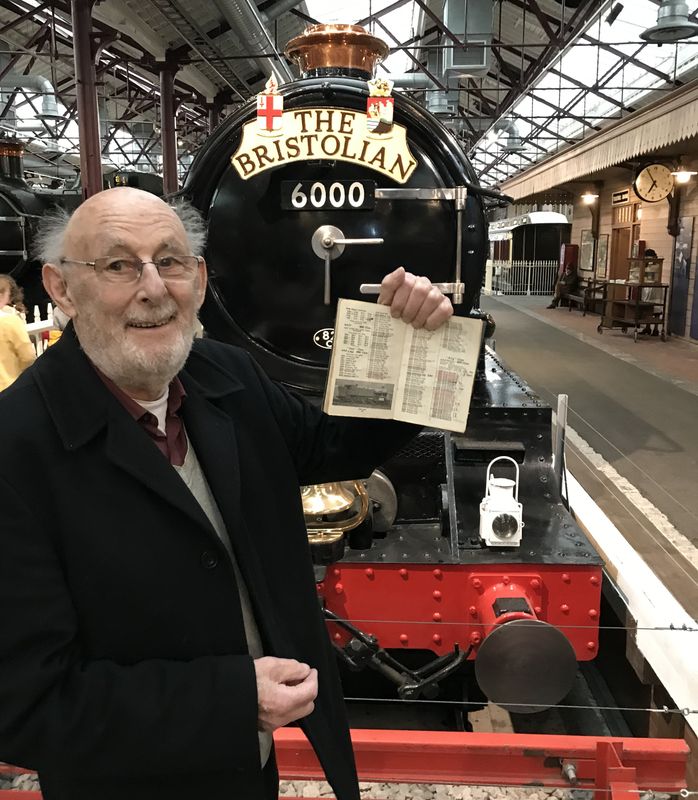
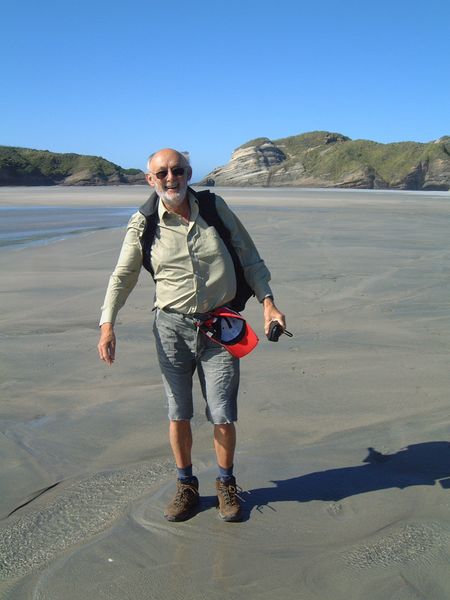
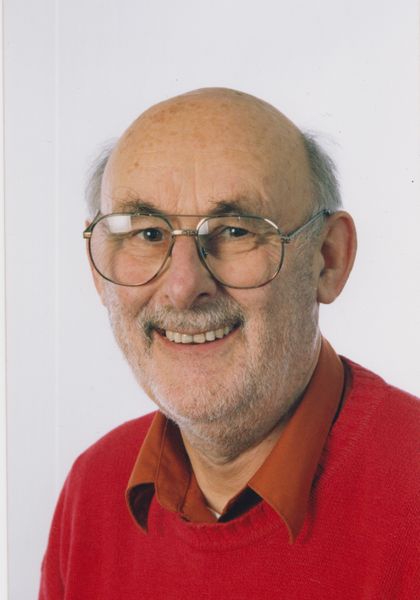
Paul Johns (13 Mar 1934 - 14 Oct 2026)
For Charitable
Donations To
The Derby Bosnia-Herzegovina Community Association (DBHCA)
Please send donations to
A.W. Lymn West Bridgford
A.W. Lymn West Bridgford
https://www.paypal.com/donate/?hosted_button_id=39GZAX9MNET4S
You may donate directly here in memory of Paul, or on the day of the service there will be a donations box
Funeral Guide is not responsible for the content of external sites.
Funeral Director
- Location
- Southern Cemetery (Wilford Hill) Loughborough Road West Bridgford NG2 7FE
- Date
- 5th Nov 2026
- Time
- 1pm
Paul Johns was an activist and Methodist lay preacher who served as chair of the Campaign for Nuclear Disarmament (CND) between 1985 and 1987.
At a Thanksgiving Service for Paul's life on 5th November 2026, his friends Peter Curtis and Geoff Daft delivered the following eulogy which captures Paul's life and work in wonderful detail. We thought we would include the complete text here.
--
[Paul's story, begun by Peter Curtis]
Paul Johns was a remarkable man. To do justice to him we had to start with his love for family. That’s why Neil spoke first and shared Paul, the family man, with us. What Geoff and I have to do is so share with you the story of a man who on the basis of a Christian faith initially inherited from his parents but later embraced for himself, developed a deep-seated commitment to making the world a better place.
Birth, childhood and schooling
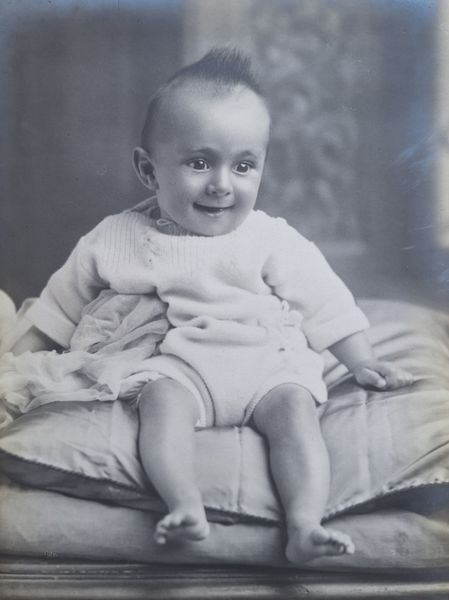
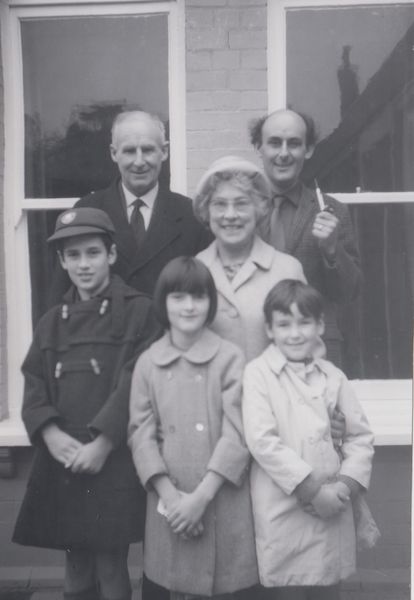
Born in March 1934, elder son of the Rev Alfred and Mrs Margo Johns, Paul’s earliest memory was of 5th May 1937, the day of the coronation of George VI. There was a street procession outside their house in Shefford, Bedfordshire, and Paul remembered being held up to the window, wearing a red woolly suit, to watch the band. Later to become a Nottingham Forest supporter, Paul was a Red from the very beginning!
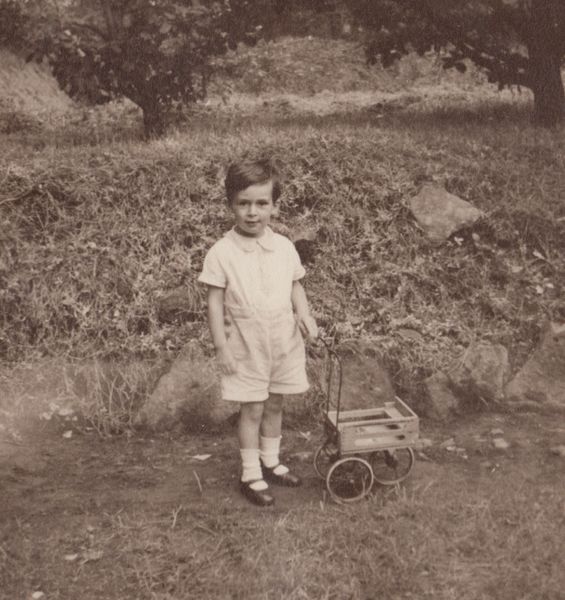
His early childhood was happy. He remembered having a toy steam roller that he pulled along behind him. In the street one day a real steam roller came towards him. The driver stopped, looked at Paul’s toy, and asked: ‘Do you want to swap?’ His mother had to explain what ‘swap’ meant!
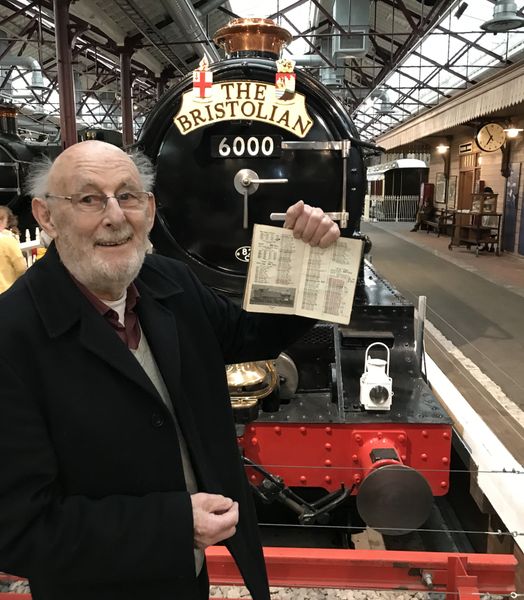
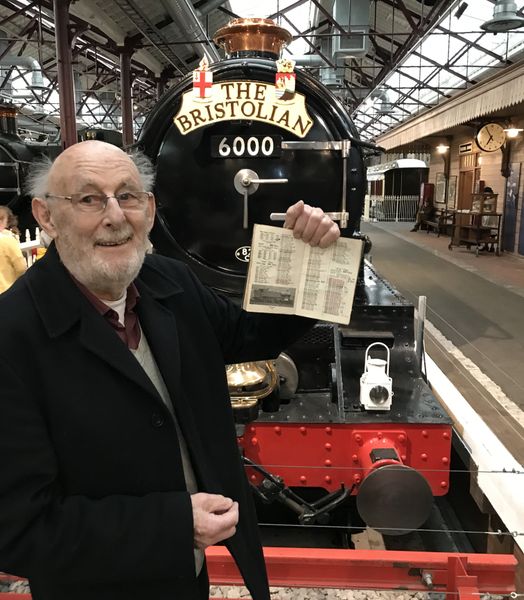
Methodist ministers move every few years and from Shefford the family moved to Sheffield. There Paul remembered being given his first toy train set, a Hornby, at Christmas, the start of a life-long love of railways. At his nursery school, every Friday you could choose a toy to bring from home – Friday was therefore called ‘Choose Day’ and he remembered confusing his mother by insisting Friday was Tuesday/Choose Day.
Those were war years, and bombing in Sheffield meant he and his mother were evacuated to Calver in Derbyshire before the whole family moved to Torquay where they lived until 1946 and where Paul’s much loved brother Stephen was born. Their house had a yew tree from which berries could be dropped onto passers-by, one woman complaining to Paul’s father that that was disgraceful behaviour for the son of a preacher!
Paul remembered the run-up to D-Day with all the little boats assembling in Torbay harbour – though he didn’t then understand the significance.
Leaving primary school coincided with leaving Torquay to move to Paignton, where his father was now minister. Paul remembered going to the cinema with his mother to watch Gone with the Wind and Wuthering Heights, the condition being that he should then read the books!
Paul went as a border to Kingswood School, a school founded by John Wesley in Bath for the sons of his Methodist preachers. His years at Kingswood were happy and formative. In summer, the thing to do was get dressed, climb out of the dormitory window and, indeed, the school grounds and go for a walk around the village.
Paul was particularly grateful to Mr Isaac, who encouraged his love of history. Likewise to Headmaster, Mr Sackett, whose approach to Christianity was not to be dogmatic but to encourage an enquiring mind. Paul was convinced his Kingswood years laid firm foundations for later life.
Paul was an all-rounder. He played for the first rugby XV, and enjoyed drama, the pinnacle of his acting career being playing Henry Higgins in Shaw’s Pygmalion. In later years he would write plays of his own.
His parents visited for big school events and this was a time of great trepidation for the boys. “Would mother behave herself”? Would she wear some fantastic hat that would be the subject of ridicule!
Meeting Ruth
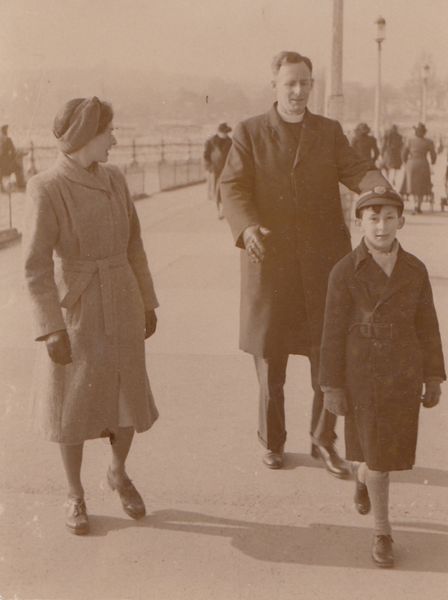
In 1948, while Paul was at Kingswood, the family moved to Teignmouth, a place he loved for the rest of his life. It was the place of his teenage, maturing years. This was where he first met his wife-to-be, Ruth. They met, would you believe it, because of their fathers’ shared interest in trains.
National Service and University
From Teignmouth, the family moved to Bristol from where Paul did his two years’ national service and then moved on to university, his friendship with Ruth still flourishing.
He was in the RAF, stationed in Bedfordshire, Essex and Norfolk, but apart from an unsuccessful period learning to fly Paul described this period as ‘largely boring’. But that wasn’t the case for what came next - life at Oriel College, Oxford where Paul read history, the subject he loved.
Undergraduate years was a period of development of Paul’s international awareness and passion for social justice, traits that would shape his adult life. He was a founder member of the Joint Action Committee Against Racial Intolerance at the beginning of the anti-apartheid movement. The students raised money to pay for the fees of a black African student to come to Oxford. Making the world a better place?
Marriage
In 1957, while they were in Oxford, Paul and Ruth married. There are no wedding photos because the photographer (their landlord) forgot to put film in the camera! A key element of Oxford life was the Methodist John Wesley Society, which combined the spiritual with the social – punting in the summer, regular discussion groups. Though not herself a student, Ruth was very much a part of that life.
Married life in Oxford must have suited them as Martin was born three weeks before Paul’s final exams! Paul remembered the night Ruth was in labour. He was walking the streets of Oxford after taking her to the John Radcliffe hospital. He met a police officer who wanted to know what he was doing! You can imagine the conversation!
Early career – Dunlop, Northern Foods, Courtaulds
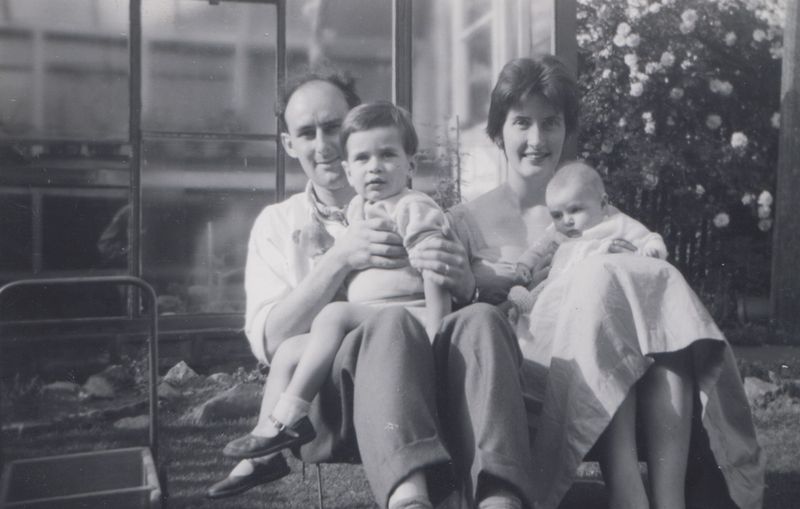
Paul decided that after graduating he wanted to go into industry, attracted not least by the idea of improving relations between staff and management. Early peace making? Making the world a better place? So the early period of his career was spent in junior management post with three largish companies, Dunlop, Northern Dairies (that became Northern Foods) and Courtaulds. This required periods in Birmingham and Rochdale, but eventually, in the early 1960s, brought the family to Nottingham by which time Naomi and Neil had completed the family. Ruth, a young Mum with three young children, became a founding member of the Pre-School Playgroups Association. And while living in West Bridgford she took the bold initiative that resulted in the formation in 1965 of the Family First Trust created to support families with housing crises – now it’s Ruth making the world a better place!
While working with Courtaulds, Paul supported Ruth in her Family First project but found that commitment incompatible with full-time work, so from that point on he opted for mainly part-time working, principally with a leading national management consultancy company, Urwick, Orr and Partners, of which he eventually became a senior partner. He was involved with UOP for the next 20 years or so including working for nine months with Westland Helicopters seeking to improve productivity. He worked away from home quite a lot, but wrote letters to the children – Neil recalling a story about a rocket powered by tomato soup that took them to the moon!
Early Forest
On 27 November 1971 something special happened in Paul’s life - his first Forest match (v Leeds at the City Ground). He went because Neil supported Leeds at the time. Soon he was going regularly and was a regular for the rest of his life. He went to the 1979 and 1980 European Cup Finals with Neil. Remember that red woolly hat he wore watching the coronation of George VI? For as long as I knew it, the door of the downstair toilet in Paul’s house in West Bridgford carried the sign ‘Forest supporters only’.
Separation
Sadly Paul and Ruth found themselves growing apart and they eventually separated in 1973. After the separation, Paul continued to work with UOP until the early 1980s, including two short stints in Australia. But the early 1980s were a crucial period for Paul, 1981 providing something of a turning point in his life.
CND and the Early 1980s – a turning point
Consultancy was beginning to frustrate him, and in a diary he wrote that joining CND at the start of 1981 was his chance to marry his action to his faith and 'do something useful'. He wrote: "I've joined CND - a start on the road to active commitment to a cause in which I believe. And I've joined the church at Keyworth and thus resumed a more openly Christian life. I feel my spiritual life is growing richer. The way ahead seems clearer now... [May] God give me the courage I need in the years ahead - to make new ventures in friendship, to achieve more through activity in the community … to enrich my own life by enriching the lives of others."
On Christmas Eve 1982 he wrote: "In a way I feel a sense of rebirth in middle age… a new energy and assertiveness... Having now taken the job of chairperson at Christian CND I'm wholly committed to the peace movement. It's an opportunity to do something worthwhile."
After Christian CND, for another two years Paul was Chair of national CND, elected at the annual conference in Sheffield to succeed Joan Ruddock. There would then follow much speech-making, events at key locations - nuclear bases and Greenham Common – and getting arrested!
He was arrested once near Dumbarton on the Clyde, near the Trident submarine base. He was amongst a group of people who handcuffed themselves to each other and lay down in the road, outside the base’s entrance. He remembered being charged and spending a night in a police station and being served baked beans on toast by a police office for breakfast!
He was arrested again at RAF Molesworth in Cambridgeshire. He defended himself at Chelmsford Crown Court on a charge of intent to commit criminal damage. He had touched a strong barbed wire fence with a small wire cutter. Hear the story in his own words. He writes:
“At the police station the sergeant said to me: ‘What would you like us to charge you with?’ I said ‘Do I have a choice?’ He replied: ‘Well if you’re charged with criminal damage, since you obviously committed none the case will just be dismissed by the magistrate. But if we charge you with intent to commit criminal damage that’s more debatable and you will go to a Crown Court and be tried by jury … I’d recommend that if you want publicity for your case we charge you with intent’; and that’s what happened... CND couldn’t pay for a barrister so Paul represented himself. He recalled the judge saying to him: ‘We’ve reached the point, Mr Johns, when you have the opportunity to be interviewed by your defence counsel, but since you are your own defence counsel you will have to interview yourself.’ By this time Paul says the jury got the joke and were laughing. He then asked himself a rhetorical question. ‘If I was intent upon committing criminal damage, would I have taken a tiny little knife and applied it to a very big, strong fence?’ But the judge said: ‘I am sorry I can’t allow that, Mr Johns, because it’s a leading question.’”
Paul attended rallies in Europe and America. He was convinced that the skills and experience he gained at CND helped him in later years – giving him confidence to deal with people at different levels, politicians and the like – in a way consultancy work would never have done.
Traidcraft and Thought for the Day
After stepping down from his role with CND, Paul accepted the offer of a job as CEO of the ‘fairtraid’ company Traidcraft. This brought together representatives of all the major fair trade organizations (Christian Aid, Oxfam etc) to set up the ‘fairtrade mark’ as the recognised sign for consumers that the product (e.g. coffee, bananas) had been fairly traded from growth to final sale. Whenever you see the Fair Trade symbol, think of Paul!
And while at Traidcraft, he met Ernie Rae, BBC religious programmes presenter, who suggested he apply to do Thought for the Day on Radio 4, and introduced him to the editor. Many of us will recall Paul’s clarity of voice and thought across his many broadcasts.
SANA – 1992-2023
When Paul completed his period as chair of CND, he’d wondered how best to use the skills he has developed (public speaking, campaigning, taking to senior people etc) in future. Well, from the early 1990s to just three years ago there was a new passion in Paul’s life, the charity he formed called SANA, a charity working for reconciliation in Bosnia. I’m going to ask Geoff Daft, one of SANA’s trustees, to tell that part of Paul’s story.
[Paul’s story continued by Geoff Daft]
As you can see, I am going to try to tell you of the work Paul carried out and inspired in Bosnia Herzegovina for over a quarter of a century. There is so much to tell so where do I start? I must begin by thanking Paul's Bosnian friends and co-workers, Admela Beganovic and Aleksander Lacovic for their help in what I am going to tell you.
Paul's interest in Bosnia, was sparked by the civil war which began in 1992 and ended in 1995 which included several atrocities, especially that in the town of Srebrenica. Paul travelled to Sarajevo, Bosnia in 1995 on behalf of the Methodist Church to over see the use of a large grant, intended for relief towards the end of the war.
Paul, it is fair to say, fell in love with Bosnia and its people and over the next 28 years made more than a hundred visits, raising thousands of pounds for many projects both in Bosnia and the UK. Indeed, Bosnia Herzegovina is a country of startling contrasts. Mosques and churches stand side by side in towns and villages which share a rich but troubled history where grand architecture rubs shoulders with the scars of war.
He was inspired to create a charity called SANA, named after one of the countries rivers with its motto of 'Our Business is Hope' Nas Posao je nada.
His charity was eventually wound up in 2023. At the time SANA's board members received a letter from Aleksander Lacovic one of SANAs key workers. Here is what he wrote.
Dear Board Members of SANA,
Since we have come to the end of SANA, I would like to express my feelings and thoughts about SANA’s era in BiH.
Paul had a tendency to describe SANA as a small British humanitarian organization, but for the people to whom SANA helped, SANA was anything but a “small” organization.
Small organizations do not build a sports complex with four different sports pitches in the war-torn town of Srebrenica for all their citizens.
Small organizations do not gather teachers and children from the UK and Bosnian schools into a “big curriculum project” and organize huge teaching events abroad.
Bosniak people, Imams and politicians from Srebrenica and other places always ask and send greetings to Paul and SANA members whenever I see them.
For the Serbian community in Srebrenica, SANA is the biggest and the only foreign organization that has helped their children and families.
Small organizations do not bring people who aren't speaking to each other to a table to exchange their thoughts and feelings and to understand each other from different perspectives as SANA has done in so many places including Srebrenica.
For the raspberries producers in Zeleni Jadar near Srebrenica, SANA gave hope for a better tomorrow and taught them how to improve the quality of their organic products and how to export those in a foreign market.
Finally, for its employees, SANA was a great place to learn and experience new things, to work on something meaningful, to meet wonderful people and to get to know the "English way of everyday life". We might have started as employees, but we certainly ended as friends for life.
During our work for SANA we were very proud to say that we worked for a UK based Humanitarian organization.
So, I'm sorry Paul, but SANA was a Great British Humanitarian organization that worked for a quarter of a century in BiH and had great success gathering and giving material and financial help for those in need after the war. But, more importantly than that, SANA is, and it always will be, in the hearts of people who have met you and members of SANA and who got to know SANA through the hard work that you, Paul Johns, had to put in.
So, what did Paul think of SANA? This is what he wrote in 2024
“I, like many others, became concerned about the bitter war which led to the collapse of Yugoslavia, and in particular by the mutual destruction of urban and village life in little-understood Bosnia Herzegovina. There emerged a corresponding need for mutual understanding between Muslim and Christian people in this country.
“So, with strong and generous support from local Christian and Muslim friends I formed a charitable trust. We called it SANA, the name of a river in Bosnia.
SANA continued its work for around 25 years. It was forced to close in 2023, mainly by the pandemic with its sudden strict restrictions on trade and travel; and with much work done but much still to do by way of reconciliation and reconstruction.”
Some of SANA’s achievements were planned, packaged and financed in advance. An example were two garment-making workshops where women from families in war-torn villages, could learn to make clothing for their families.
Some projects were part-planned in advance, then adapted in ways at the discretion of local people. An example would be the different ways in which different schools both in Bosnia and the UK used SANA’s ‘peace education’ material which the accompanying website provided. Another would be the shared organization of two teachers’ conferences, one in Bosnia and one with a UK local authority.
Finally, there were opportunities, not anticipated by SANA, but born of discussion and trust which grew between SANA people and the Bosnian participants. An example was the new sports arena in Srebrenica, largely financed by the Asmir Begovic foundation, he was the Bosnian national team goalkeeper. Another was the project, ultimately aborted by the pandemic, to set up the selling of raspberries from a cooperative of Serb and Bosniak farmers in Srebrenica to a national food importer in the UK. Paul helped communities, families and individuals.
There is a Bosnian young man here today who is a renowned pianist. He has won prizes for and has played the piano in many prestigious venues. His name is Damir Durmanovic. Paul learnt of his amazing ability through his friend Admela and was able to contact the Yehudi Menuhin School where he studied from 2013 to 2016 and later graduated from the Royal College of Music. Indeed Damir raised money for SANA when he played at a concert in Nottingham
I accompanied Paul to Bosnia twice. The first visit in 2011 was mainly to see the Potocari Memorial Cemetery in Srebrenica which did have a profound effect on me and following my return to England I began to help Paul in the various SANA projects that he had developed in Bosnia and were funded in the UK.
SANA’s project, 'Bless Srebrenica' demonstrated how small acts of kindness and financial support can make a lasting difference. By supporting families, encouraging people to stay in the town and bringing divided communities together, the project sought to plant the seeds of peace, reconciliation and hope.
I was able to see first-hand the relationships he had developed with mosques and Muslim communities here in the UK and also with Coventry Cathedral who collaborated with his Schools for Peace initiative.
On my second visit to Bosnia in May 2016, we spent two nights in Srebrenica, something most visitors to the town do not do; Paul showed me the many derelict factories, the houses that cannot be lived in because of the damage from the 92-95 war, the memorial in the school playground where 74 children were killed and 100 injured, we saw the shell damage and bullet holes in the walls of houses, and women hanging out washing on damaged balconies without safety railings. We sat and listened to a Bosniak wife and mother talk of her murdered husband and sons and her deep hatred for the Serbian community and the church within the town.
So, I witnessed Paul talking to and listening to politicians from the different sides of the divided community, talking of the frustrations of life in the town; meeting two men who were positive in each other’s company but would not allow themselves to be photographed together.
Paul's Bless Srebrenica initiative demonstrated how small acts of kindness and financial support can make a lasting difference. Paul's work supported families, encouraged people to stay and tried to bring a divided community together. His project endeavoured to plant the seeds of peace, reconciliation and hope.
There are so many more stories that could be told of Paul's SANA charity that would fill the next hour and more! But I will end with SANA's motto: 'Our Business is Hope'.
Thank you Paul for giving hope to so many.
[Paul’s story continued by Peter Curtis]
Friends, there’s just a little more of the story to tell.
Naomi
Early in those SANA years two deeply contrasting events occurred. On 6th November 1996, 30 years ago tomorrow, Paul was hit by the death of his daughter Naomi. It hit Paul so very hard. Indeed, the impact on all the family was huge. Naomi’s son, Tom, happily here with us today, was just four. Any of you who have lost children in childhood or adulthood, indeed all who have lost someone very close and so very much loved will understand. Paul was hugely talented; he was also human. He knew joy; here he knew grief.
The Premier League and Euro 96
But 1996 also brought a very different and much happier development. Building on his support for Forest, Paul joined the Football Supporters Association and – it won’t surprise you! – became a committee member. As a result he met Rick Parry, first CEO of the recently formed Premier League. Paul worked part time for the Premier League setting up fans’ panels. He met fans groups and wrote reports for the Premier League on the fans’ experience. He was part of the team running the Fans Welcome project for visiting fans (including from Croatia) for Euro96, the 10th UEFA European Championship. Nottingham was one of the 8 venues. Perfect for Paul - combining his love of Nottingham, football and the Balkans.
I turn finally to what made Paul tick, his deeply-held Christian faith.
Paul and preaching
All that Paul did in adult life flowed from that faith. On 26th Sept 2023 here at Keyworth Methodist church, Paul was recognised for having completed 60 years of preaching. His preaching was dynamic. Usually preaching without notes and often using story-telling techniques Paul believed that the sermon is not primarily the notes or even the speech the preacher makes – it’s an event in an act of worship in which preacher and congregation share and that Christ is present in that sharing. The sermon has not completed its work until it has entered into the listener’s head and been absorbed by heart and mind.
He preached in small village chapels and big cathedrals. Much of his preaching enriched this Nottingham South Circuit. For several years he was involved in the training of Lay Preachers here and he volunteered for many years as a Lay Pastor at Tollerton Methodist Church. Towards the end of the 1990s he became a member of the College of Preachers, an inter-denominational organization concerned to promote preaching skills. Paul met Stephen Wright, then College director. This led to Paul undertaking an MA on preaching with Stephen as his tutor, and in due course replacing Stephen as College Director. Paul’s passion was to bring together the Bible and the events of the world around him, to confront the world with the written word, the Bible, and the living Word, Jesus Christ. The current Chair of the College of Preachers, Canon Roger Spiller writes: Paul brought enormous energy and creativity to his role… Without him it is hard to see how the College would have had the future it has today.
But not just a preacher, Paul was also a writer
Paul the writer
Almost everybody here will remember 9/11, a coordinated suicide attack perpetrated by al-Qaeda against the United States in 2001 involving commandeered passenger airliners, two of which were flown into the Twin Towers in New York City, and a third crashed into the Pentagon, the headquarters of the United States Department of Defence.
The following year, building upon his love of using story, Paul published a book entitled September 11 and Beyond: 20 Parables of our Time, a series of stories promoting reflection on this catastrophic event.
At this time Paul also got into play-writing for the West Bridgford Council of Churches. With the assistance of Tony Vogts and Will Turner, two people who would become long-term friends, three plays were produced with the aim, as you might well guess, of linking Bible stories to contemporary social issues. One objective was to raise money for St Hannah’s Orphanage in Baghdad.
You’ll recall that President George Bush referred to Iraq as part of an “axis of evil” saying that Iraq had weapons of mass destruction and was a threat to international peace. On 20 March 2003, US and allied forces invaded Iraq and toppled Saddam Hussein's regime. One innocent casualty of this war was St Hannah’s Orphanage, a Christian orphanage providing care and education for Christian girls in Baghdad. It received aid from organizations such as the UK-based Muslim Hands aid agency. Driven in a military vehicle and wearing full protective clothing and helmet, Paul visited the orphanage taking a gift from the UK. When I asked Paul ‘were you not scared?’, he replied ‘Better I who have no immediate dependents should go than a younger man with wife and family’. Such was the measure of the man!
2026: Maundy Money
On Maundy Thursday this year, Paul’s work was appropriately recognised. He was invited to attend a service at Durham Cathedral at which King Charles presented him with a set of specially minted Maundy coins in symbolic recognition of ‘a lifetime of service to church and community’.
In a piece Paul later wrote he says ‘I have done little enough to deserve any reward. But I thank God that I have been given so many opportunities to serve.’
Friends, just occasionally Paul got something wrong. If ever a man deserved that recognition it was Paul. Paul Johns, man of deep faith, seeker of justice, tireless worker for peace, man of vision, inspirational preacher, bold thinker, advocate for the well-being of others, family man, dear friend, good and faithful servant of our Lord Jesus Christ, may you rest in peace and rise in glory.
Amen
Offline donation: donated in memory of Paul
Offline donation: donated in memory of Paul
Offline donation: donated in memory of Paul
Offline donation: donated in memory of Paul
Offline donation: donated in memory of Paul
Offline donation: donated in memory of Paul
Offline donation: donated in memory of Paul
Offline donation: donated in memory of Paul
Offline donation: donated in memory of Paul
Offline donation: donated in memory of Paul
Offline donation: donated in memory of Paul
Offline donation: donated in memory of Paul
Offline donation: donated in memory of Paul
Offline donation: donated in memory of Paul
Offline donation: donated in memory of Paul
Offline donation: donated in memory of Paul
Offline donation: donated in memory of Paul
Offline donation: donated in memory of Paul
Offline donation: donated in memory of Paul
Offline donation: donated in memory of Paul
Offline donation: donated in memory of Paul
Offline donation: donated in memory of Paul
posted a picture
Report
posted a picture
posted a picture
posted a picture
posted a picture
posted a picture
Comments