

Miss you so much
donated £100 in memory of Derrick
Report
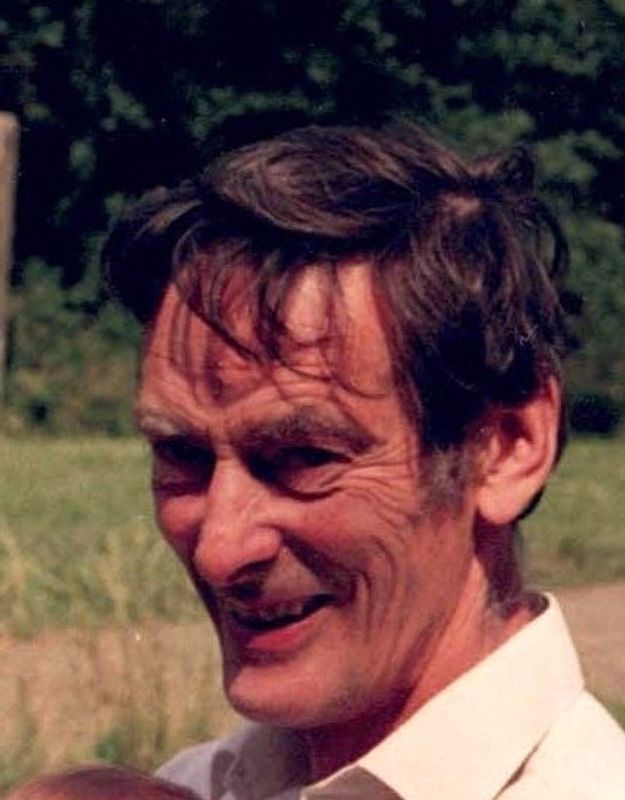

In loving memory of Derrick Boatman 11 December 1927 - 8 October 2025
Biography
Derrick grew up in Buckhurst Hill, near Epping Forest in Essex. When he was a boy, he used to go bird watching with his cousin Ken, which kindled an interest in wildlife and nature which was to last the rest of his life. At school he had a biology teacher called Jim Shillito, who introduced him to his niece Pearl. Pearl was later to become his wife and mother to his son Nigel and his daughter Helen. He went to University at King’s College in London, to study botany. After obtaining his PhD he got his first job at Trinity College in Dublin, from where he and Pearl explored Ireland on motorbikes and later in a little car.
His second job, was as a lecturer in the Botany department at the University in Hull, where he was to remain for the rest of his working life. His specialism was plant ecology. As part of his lecture course he used to take his students on field trips, on which he gained his nickname of the mountain goat because of the speed at which he used to climb hills, leaving the much younger students trailing behind.
His research speciality was peat bogs and specifically factors affecting the growth of Sphagnum mosses, the major component of peat bog vegetation. A somewhat obscure topic you might think, and I’m sure that was the view of many at the time. However we now know that peat bogs are much more efficient at fixing carbon than trees and other plants, and also are very good at holding rain water in the hills and preventing flooding downstream. So now the conservation of peat is a major concern, and huge efforts are being made to block drainage ditches and re-establish sphagnum in the uplands to restore peat where it has dried out and been eroded. Derrick also supervised a number of research students, many of whom carried on to develop their own careers in ecology. His former students and colleagues speak of him with fondness and respect, as a good friend and supportive mentor during their time with him.
In his spare time Derrick pursued his interests in nature and wildlife conservation. Although primarily a botanist, Derrick was also interested in birds and contributed to the Breeding Bird Survey and Garden Bird Survey organised by the British Trust for Ornithology. The Garden Bird Survey involved recording the birds in his garden every week, and he continued doing this right up to the end of his life. He was very keen not to miss a week, and there was one famous occasion when he was so involved in recording his birds that he completely forgot that he was supposed to be at a family gathering elsewhere! He also ran a moth trap in his garden and in later years developed an interest in pollinators – plants had to be ‘good for bees’ to earn a place in his garden.
He was also interested in landscapes and their history. An example of this is the survey he carried out of the location and composition of hedgerows in East Yorkshire, which he subsequently published as a paper. But increasingly his interests turned to practical conservation. Derrick was a conservationist before it became fashionable. In the 1960s He chaired a group called the East Yorkshire Conservation group, which worked with farmers to create and manage habitat, and later evolved into the Farming and Wildlife Advisory Group. He became very active in the Yorkshire Naturalist’s Trust, now the Yorkshire Wildlife Trust. He served on their Council and managed two of their nature reserves, Pulfin Bog and Northcliffe Wood. He was also involved in setting up North Cave Wetlands, now one of the Trust’s flagship reserves.
In later years Northcliffe Wood became a dominant feature in Derrick’s life, and it was almost impossible to hold a conversation of any length with him without it popping up at some point. Even in his 90’s, when he became too infirm to help with the more physically demanding work, he would still go to the wood regularly to cut bracken near a bench, which he used to rest on when he got tired. He used to proudly talk about the grassland butterflies which flew in the area which he had cleared of bracken.
Derrick’s dedication to his conservation work was total and his knowledge, obtained through extensive private researches and observations as well as his role as a professional ecologist, was immense. He was in his quiet and modest way a major force in the Yorkshire conservation world for many years, and the passing of his knowledge, expertise and wisdom is a great loss. He will be sadly missed by his family and by his former friends and colleagues.
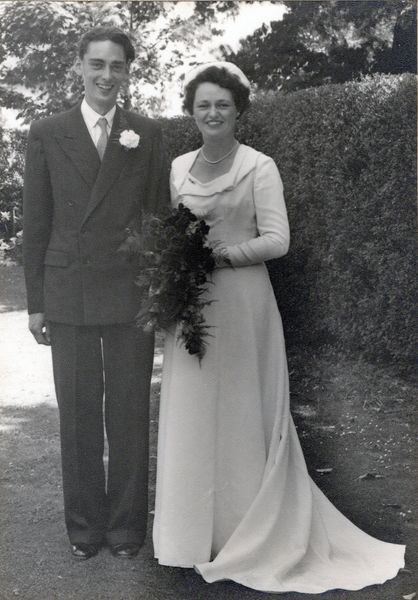
Derrick and Pearl at their wedding
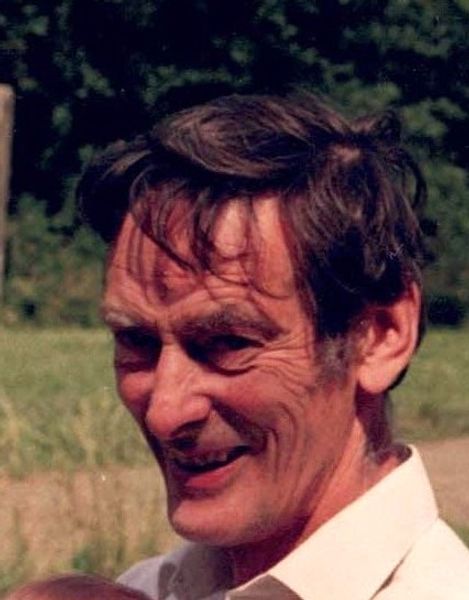
Derrick and Pearl at their wedding
Comments